|
Background
Type 2 diabetes is a major and escalating problem in many developing countries. India is predicted to have 80 million patients with diabetes by 2030. The disease has a young age onset, reaching prevalence in urban Indian populations of 2-4% at 20-30 years of age. Cardiovascular disease, a related disorder, is also rising and has overtaken infectious disease as the leading cause of death in India.
Adult obesity and inactivity predispose to type 2 diabetes. However, recent evidence suggests that susceptibility to the disorder is influenced by factors earlier in life, including intra-uterine undernutrition and rapid childhood weight gain. Interventions in pregnant women or in children may prevent disease later.
In this study, we hypothesized that-
Lower birthweight is an independent risk factor for adult insulin resistance and hyperglycaemia, and polycystic ovary syndrome (PCOS) in women, after allowing for childhood and adolescent body size and composition and growth.
Childhood metabolic risk factors are associated with a higher risk of adult glucose intolerance and PCOS, and can clinically useful predictions of adult risk be derived from childhood data, to assist paediatricians in advising families about preventing adult disease.
Objectives
To assess the following outcomes
- Glucose tolerance and insulin resistance (HOMA - R)
- Cardiovascular risk factors (lipid concentrations and blood pressure)
- Body composition and size (DXA and anthropometry)
- Polycystic Ovary Syndrome
- Measurements in the parents: Glucose tolerance, cardiovascular risk factors, and body composition and size
Methodology and Design
The Pune Children’s Study (PCS) was one of the first to be established (1991) prospectively to examine early-life antecedents of adult disease and has maintained high rates of follow- up throughout childhood. It is the only study in a population at high risk of diabetes to be able to relate serial measurements of body size, body composition and biochemical risk markers and concomitant measurements in parents, to adult outcomes.
The study demonstrated that children of low birth weight had higher insulin-like growth factor-1(IGF-1) and 30-minute insulin concentrations after adjusting for current weight at 4 years. At 8 years after adjusting for current weight, lower birthweight was associated with higher blood pressure, 32-33 split proinsulin concentrations, insulin resistance (HOMA-R), 30-minute glucose and insulin concentrations and subscapular/triceps skinfold ratio. The most adverse risk profiles were in children of low birthweight but high 8-year weight, height or fat mass.
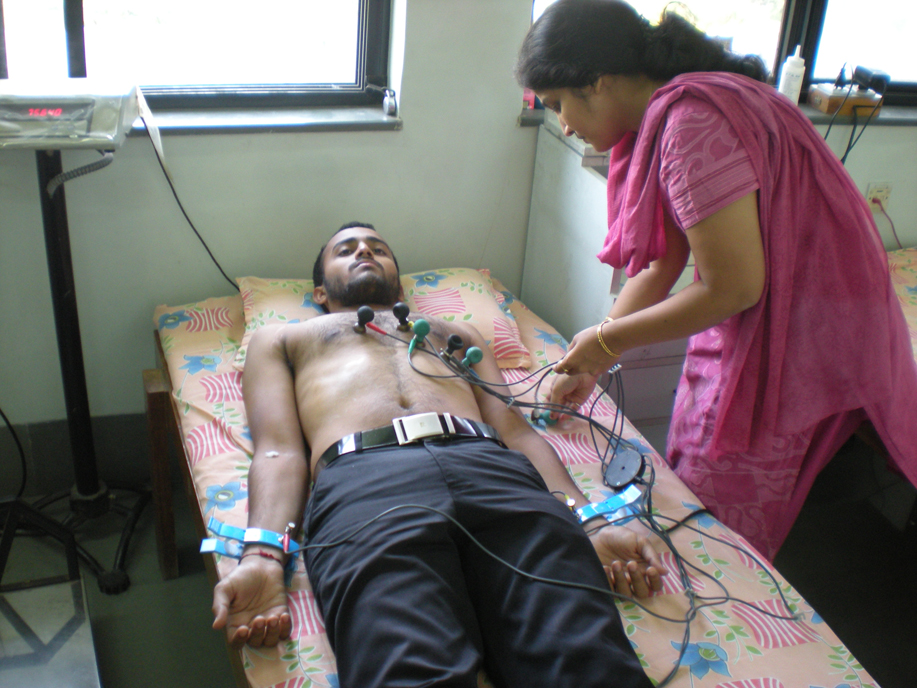
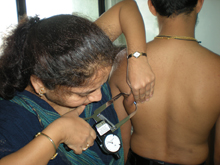
This project comprises further work on 466 young adults whose birthweight was recorded, who had anthropometry and measurements of risk factors for type 2 diabetes and cardiovascular disease (CVD) at the age of 4 and 8 years and whose anthropometry and pubertal development have been assessed annually during adolescence. These children are now 20 years old.
Results
Anthropometry and Blood Pressure - 21 years
Biochemistry - 21 years
Top
|